
Forex Trading Basics for Beginners
📈 New to forex trading? Learn key terms, market basics, practical strategies & risk steps to start trading confidently in South Africa’s forex scene today!
Edited By
James Whitaker
Forex trading, or foreign exchange trading, involves buying and selling different currencies to profit from their price fluctuations. Unlike the JSE or other stock markets, forex is a 24-hour market, running from Monday morning in Asia to late Friday in New York. This high liquidity and global reach make it attractive but also quite volatile.
At its core, forex trading centres around currency pairs. For example, the USD/ZAR pair represents the US dollar priced against the South African rand. Traders speculate on whether the rand will strengthen or weaken against the dollar, aiming to buy low and sell high, or vice versa.
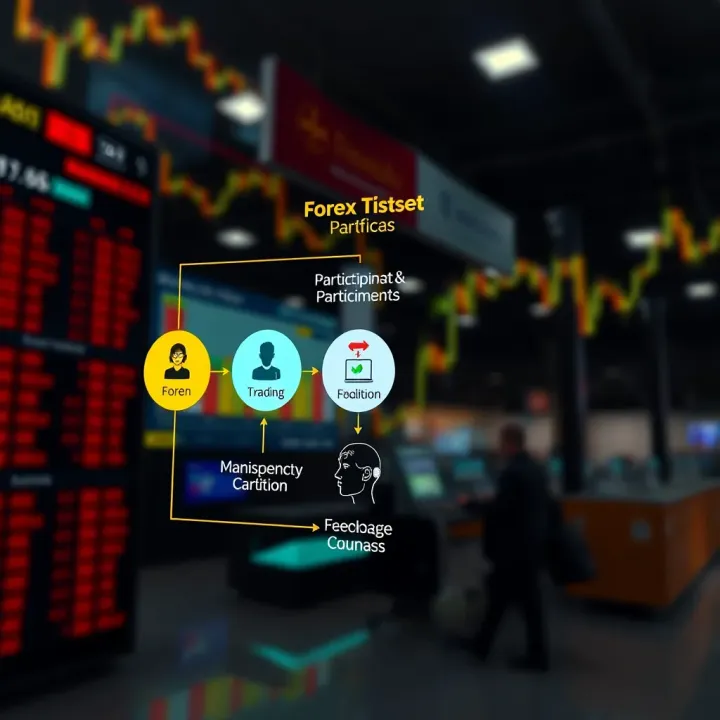
The forex market is not a physical marketplace but a network of financial institutions, banks, brokers, and retail traders connected electronically.
Banks and financial institutions: They dominate volumes and provide liquidity.
Central banks: Their monetary policies influence currency value and market sentiment.
Corporates: Importers and exporters trade currencies to hedge against exchange rate risks.
Retail traders: Individual investors participating through online platforms.
Trades happen in lots, generally:
Standard lot: 100,000 units
Mini lot: 10,000 units
Micro lot: 1,000 units
Leverage is common but risky, allowing traders to control a large position with small capital. For South African traders, brokers regulated by the Financial Sector Conduct Authority (FSCA) offer protection and trustworthy platforms.
Platforms like MetaTrader 4 or 5 and locally popular brokers provide real-time quotes, charting tools, and order execution. Before trading with real money, it's wise to use demo accounts to familiarise yourself with platform functionality and market behaviour.
Forex trading can be unpredictable. Sudden political changes, economic data releases, or Eskom load-shedding impacting whole-day trading sessions may cause unexpected moves. Employ stop-loss orders and never risk more than a small percentage of your trading capital on a single trade.
A wealth of forex PDFs and eBooks are available, trusted sources include Investopedia, BabyPips, and South African brokers’ educational sections. These materials help decode complex concepts and provide strategy insights while considering local market conditions.
Understanding these basics lays a solid foundation. Whether you’re a trader or analyst, knowing who moves the market, how trades work, and managing your risks are essential before progressing.
Starting with a solid introduction to forex trading lays the foundation for anyone serious about entering the currency markets. This section explains what forex trading really means and how the market works, allowing you to approach trading with a clear understanding rather than guesswork.
Forex trading involves buying one currency while simultaneously selling another. The goal is to profit from fluctuations in exchange rates between these currency pairs. For example, if you expect the South African rand (ZAR) to strengthen against the US dollar (USD), you might buy ZAR/USD. Should the rand appreciate, selling your position later could earn you a profit.
Unlike shares or commodities, forex trading happens 24 hours a day across global financial centres like London, New York, Tokyo, and Sydney. This constant activity means you can trade at nearly any time. It also means you’re dealing with a highly liquid market, where large volumes of currency change hands every second.
The forex market is decentralised; there’s no central exchange such as the JSE for stocks. Instead, currencies are traded electronically over-the-counter (OTC), connecting banks, brokers, corporations, and individual traders.
Currency prices reflect worldwide events, interest rates, political developments, and economic data releases. For example, if the South African Reserve Bank (SARB) adjusts repo rates unexpectedly, it often causes ripple effects in the rand's value.
Trading is typically done through brokers who provide access to trading platforms. These platforms show real-time prices and tools for technical or fundamental analysis. When you place a trade, you don’t own the physical currency but enter a contract speculating on the price movement of the pair.
The volatility and continuous nature of forex make it attractive but also risky. Understanding how the market functions helps you make better, more informed decisions.
By grasping these basics, you build a firm foundation to explore more complex strategies and risk management techniques that will be covered later in the guide.
Understanding the key concepts in forex trading is essential before diving in. These foundational ideas help traders make informed decisions and manage risks effectively. Without a solid grasp of currency pairs, pips, lots, and leverage, anyone could easily misinterpret market movements or exposure, leading to unnecessary losses.
At the heart of forex trading lie currency pairs. A currency pair shows the value of one currency relative to another, for example, USD/ZAR or EUR/USD. The first one is called the base currency, and the second is the quote currency. If the USD/ZAR pair is at 18.50, it means one US dollar costs 18.50 South African rand.
Quotes consist of the bid price (what buyers pay) and the ask price (what sellers want). The small difference between these two, called the spread, represents a trading cost. For instance, if the bid is 18.45 and the ask is 18.50, your trade starts already 5 cents "in the red", so to speak.
Different pairs show varying levels of volatility and liquidity. Major pairs like EUR/USD tend to be more predictable, while exotic pairs such as USD/ZAR can jump around more due to local economic factors like petrol prices or political events.
A pip, short for "percentage in point", is the smallest unit a currency can move. In most pairs, this means a change at the fourth decimal place. For example, when EUR/USD moves from 1.1200 to 1.1201, that's one pip. But pairs involving the South African rand often quote to two decimal places, so a one-pip move for USD/ZAR would be from 18.50 to 18.51.
Trading involves buying or selling in lots. A standard lot equals 100,000 units of the base currency, but many brokers offer mini or micro lots (10,000 or 1,000 units) perfect for beginners or smaller accounts. So, buying one mini lot of USD/ZAR means controlling 10,000 US dollars worth of exposure.
Leverage is borrowed funds a broker offers to control larger positions with less capital. For example, a 1:100 leverage means you only need R1,000 to control R100,000 worth of currency. While leverage can boost profits, it magnifies losses too. South African regulations may cap leverage for retail clients to protect them from excessive risk.
Remember: Mastering these terms isn't about jargon — it's about understanding how your money moves in the market. Getting comfortable with pips, lots, and leverage helps you plan trades wisely, making sure you don't bite off more than you can chew.
Grasping how forex trading platforms work is key for anyone serious about entering the forex market. These platforms serve as your gateway to the market, allowing you to place trades, analyse currency pairs, and monitor market movements in real time. Think of them as your cockpit when navigating through the fast-paced forex environment.
South African traders commonly use platforms like MetaTrader 4 (MT4) and MetaTrader 5 (MT5), largely because of their simplicity and wide range of tools. These platforms support automated trading with expert advisors (EAs), which makes trading more approachable, especially if you’re still learning the ropes. Another local favourite is ThinkMarkets’ ThinkTrader platform, known for its sleek interface and mobile-friendly design. Each platform connects you to global forex liquidity providers but varies in user experience and technical features.
More recently, web-based platforms such as TradingView have gained traction for their advanced charting capabilities, helping you identify trends and set alerts easily. Platforms linked with South African brokers like IG or EasyEquities may also offer seamless options to trade forex alongside shares and commodities, suiting traders seeking diversification.
A key consideration is ease of use. You want a platform that’s intuitive without skimping on essential functions. Look for:
Real-time price feeds to act swiftly on market moves.
Customisable charting tools so you can apply your preferred indicators and study price action effectively.
Order types and execution methods that match your trading strategy, whether that’s market orders, limit orders, or stop losses.
Strong security protocols to protect your funds and personal data.
Mobile app availability for managing trades on the move, which can be a lifesaver during loadshedding periods or when you’re out and about.
Additionally, consider the platform's integration with local payment methods and whether it complies with South African financial regulations, particularly those by the Financial Sector Conduct Authority (FSCA). This adherence ensures reliable access and protects you from dubious operators.
Remember, the best platform is one that fits your trading style and offers the tools that truly matter to you—not necessarily the one with the flashiest features.
By taking time to assess these practical elements, South African traders can pick a platform that not only makes trading simpler but also supports a disciplined, successful approach to the forex market.
Managing risk is fundamental in forex trading — it protects your capital and keeps you in the game longer. Trading strategies guide your decisions and prevent emotional reactions that can lead to costly mistakes. This section breaks down practical risk management approaches and simple strategies suited for beginners, so you can trade more confidently.
The first rule in risk management is never to risk more than a small percentage of your trading capital on one trade — typically no more than 1-2%. For example, if you have R10,000 to trade, risk R100 or R200 per trade. This way, even a losing streak won’t wipe you out.
Stop-loss orders are essential tools that automatically close your position if the price moves unfavourably beyond a set level. Suppose you buy EUR/ZAR at R18.50, placing a stop-loss at R18.30 to limit losses if the price drops. This protects you from large unexpected swings, especially during volatile times like after SARB announcements.
Diversification also helps manage risk. Rather than putting all your money into one currency pair, you can spread it across different pairs — such as USD/ZAR, GBP/ZAR, and EUR/USD — which react differently to global events. This reduces your overall risk exposure.
Besides, leverage needs careful handling. While it can amplify gains, it magnifies losses. Beginners should use lower leverage limits (like 1:10) instead of the maximum offered by brokers, to avoid blowing their accounts quickly.
Tip: Always practise your risk rules during demo trading before committing real funds — this builds discipline and helps you stick to the plan under real pressure.
A straightforward strategy to start with is the trend-following approach. Here, you analyse chart movements to identify a clear direction — up, down, or sideways — and place trades accordingly. For example, if the USD/ZAR chart shows higher highs and higher lows, you might consider buying, riding the upward trend until signals indicate a reversal.
Another popular method is range trading, which works well for currency pairs stuck within price boundaries. You buy near support levels and sell near resistance. If you notice EUR/USD consistently bouncing between 1.0800 and 1.0950, you can profit from these predictable moves.
Breakout trading involves entering the market when price breaks above resistance or below support, anticipating a strong move. Say ZAR weakens sharply after a political announcement, breaking below a key support level — this could signal a good selling opportunity.
Finally, beginners should keep strategies simple and avoid overtrading. It’s tempting to take every opportunity, but focusing on quality setups reduces errors. Tracking your trades and reviewing mistakes helps develop better strategies tailored to your risk tolerance and market style.
These risk management tactics and basic strategies form a solid foundation. They steer clear of reckless gambles, increasing your chances of sustainable success in forex trading.
Access to the right learning resources can make a big difference when getting started with forex trading. PDFs are particularly useful since they offer a compact, offline reference that learners can revisit anytime. In South Africa, where data costs and internet access can sometimes be limiting, having essential material saved as PDFs helps traders study at their own pace without worrying about connectivity.
PDFs keep all your learning material in one easy-to-navigate spot. Unlike websites that require constant internet access or videos that can be data-heavy, PDFs let you quickly search, highlight, and bookmark key sections. Imagine you’re reviewing risk management strategies — you can easily jump back to important points without re-watching long tutorials.
Also, many PDFs are designed as structured guides with clear headings and step-by-step examples, which help break down complex topics like leverage or pip calculation into manageable chunks. This structure is often missing in fragmented online articles.
Additionally, PDFs from reputable sources often include charts, tables, and diagrams that clarify abstract concepts. For example, a PDF explaining how currency pairs move might include visual aids showing real market scenarios relevant to the South African rand (ZAR).
Having a solid PDF guide at hand is like keeping a compact forex classroom in your pocket — great when you're commuting or working somewhere without wifi.
Several trustworthy forex education providers offer free or affordable PDFs suited to beginners and intermediate traders. Some key resources worth seeking out include:
BabyPips School of Pipsology: Known globally, this comprehensive beginner’s guide translates well into PDF format and covers basics to advanced topics.
Forex Factory Educational Materials: Offers practical guides and strategy breakdowns often available as PDFs.
South African Broker Educational Content: Many local brokers such as IG Markets and ThinkMarkets provide downloadable guides tailored for South African traders, including how to factor in local market hours and currency specifics.
Investopedia Forex Guides: While primarily website-based, Investopedia offers downloadable cheat sheets and glossaries on forex terminology.
To find these PDFs, check out the education or resources section on reputable broker websites, forex forums, and financial learning platforms. It’s wise to verify that the material is up to date and relevant to the South African context, especially given factors like daylight saving changes and local market conditions.
In brief, PDFs remain a practical, user-friendly way to learn forex in South Africa. They give traders clear reference points and structured knowledge without stressing your data or internet access, making them an essential part of a solid forex education toolkit.
📈 New to forex trading? Learn key terms, market basics, practical strategies & risk steps to start trading confidently in South Africa’s forex scene today!

📊 New to forex trading? Learn essential concepts, risk controls, and strategies designed for South Africans. Start trading smart with local tips and tools today! 💹

📘 Learn the basics of forex trading with top books covering strategies, risk management, and psychology. Perfect for South African beginners looking to trade confidently.
📈 New to forex trading? Get practical tips on market basics, smart strategies, risk management & trusted resources to build your confidence & skills.
Based on 8 reviews