
How to Convert Gray Code to Binary Step-by-Step
🔢 Understand Gray code's role and practical value in technology. Learn clear, step-by-step methods to convert Gray code to binary with examples and uses.
Edited By
Charlotte Ellis
Binary code readers are devices or software tools designed to interpret binary data — the fundamental language of computers made up of zeros and ones. Essentially, these readers decode this stream of binary digits into usable information or commands, acting as a bridge between digital signals and human-readable output.
Understanding how binary code readers work is important for traders and investors interested in technology firms, as these components underpin many data-driven systems and innovations around us. You'll find binary readers integrated into everything from data centres to manufacturing robots and telecom networks.

Binary code represents data using two symbols: 0 and 1. Each binary digit (bit) carries a simple two-state value — like an on/off switch. Groups of bits combine to form bytes, delivering more complex data such as numbers, text, or machine instructions.
Binary code readers come in several forms depending on where and how they're used:
Hardware readers: Devices like barcode scanners on retail shop floors convert physical binary patterns to digital data.
Software decoders: Programs that interpret binary files or streams for computers to process, such as a compiler translating binary machine code.
Signal analyzers: Telecom equipment that decodes binary signals transmitted over networks.
The technical process involves detecting the binary signal, sampling the bits, and converting them to a structured format. For example, a hardware reader uses sensors to measure light or magnetic patterns, distinguishing zeroes and ones based on contrast or magnetism. Software readers follow defined encoding rules to map bits to characters or instructions.
Binary code readers act as crucial interfaces allowing machines to understand and react to digital information swiftly and accurately.
In manufacturing, robots use binary readers to follow coded instructions for assembly lines.
Telecom providers decode binary signals to connect calls and data services.
In fintech, trading algorithms analyse binary-encoded market data feeds to make real-time decisions.
By grasping the basics of binary code readers, analysts can better assess technology companies’ infrastructure, their product capabilities, and potential growth factors linked to advances in data interpretation and processing.
Understanding binary code is the cornerstone of grasping how modern technology operates. Binary code, consisting simply of zeros and ones, forms the language that computers and electronic devices use to process and store information. For traders and investors, knowing the basics of binary code deepens insight into the technologies powering financial platforms, data centres, and communication networks.
Binary code is a system of representing text or computer processor instructions using just two symbols: 0 and 1. Each binary digit, or bit, encodes a simple on/off condition—akin to the switch in a home’s electrical wiring being off or on. This fundamental simplicity makes binary code both reliable and efficient for digital devices.
The structure of binary code is built on groups of bits, such as bytes (usually 8 bits), which combine to represent more complex data like characters, images, or commands. For example, the letter "A" in ASCII encoding translates to 01000001 in binary. The practical takeaway is that every piece of digital information we interact with starts as these simple sequences.
Every digital device fundamentally relies on the use of zeros and ones for information processing. This binary approach is practical because electronic components struggle to distinguish subtle signal differences, but can easily detect two clear states—voltage present (1) or absent (0). This reduces errors and boosts speed, making it the preferred system for all computing platforms.
Binary code serves as the underlying framework for all digital information, whether it's the numbers on a stock ticker on the JSE or a video streamed on your mobile. Every file, transaction record, or software application is ultimately a sequence of zeros and ones interpreted by hardware and software.
This binary foundation enables a wide range of computing functions such as encryption in secure financial systems, data compression in mobile networks, and real-time processing in automated trading algorithms. Recognising this helps investors appreciate the technical backbone of electronic finance tools and the reliability of the systems they depend on.
Binary code underpins nearly every aspect of computing and electronic devices today. From the mobile devices in your pocket to the vast server farms handling stock trades and banking transactions, binary is the common language that ties all these systems together.
For traders and analysts, this knowledge demystifies why fintech platforms can process millions of transactions per second and how algorithmic trading depends on quick, error-free data handling. Plus, the binary system's design minimizes electrical noise and ensures consistent performance—critical when milliseconds make a difference in markets.
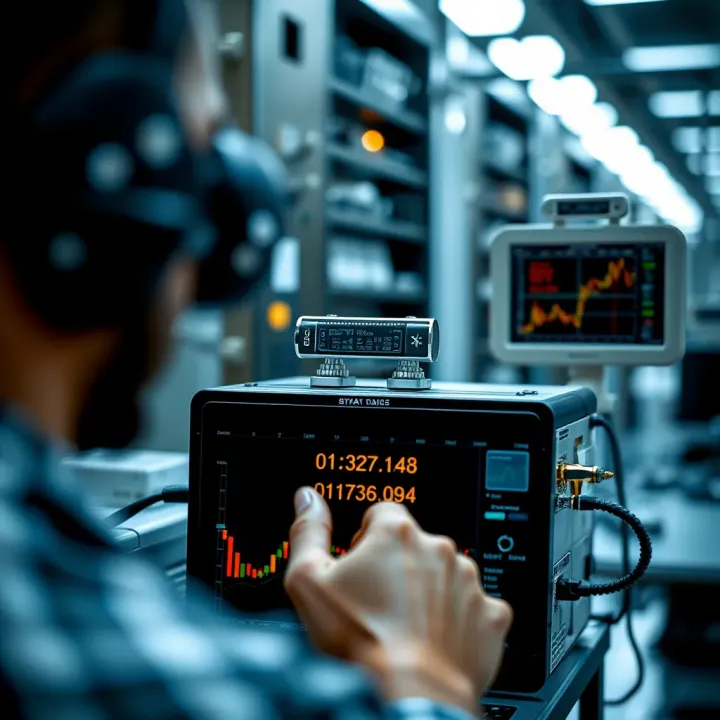
Additionally, binary code is essential for data storage and communication. Digital storage mediums like SSDs, HDDs, and cloud services all rely on binary to encode vast amounts of information compactly and securely. Communication protocols in mobile and wired networks use binary to transmit data accurately, from financial updates sent to your mobile banking app to the signals coordinating automated payment systems.
Understanding binary code is not just about technology—it unlocks a practical perspective on how information flows in our increasingly digital economy and why modern financial services rely heavily on these basic ones and zeros.
In summary, binary code is the silent engine behind all digital data, enabling reliable communication, storage, and processing in financial markets and beyond. Becoming familiar with its principles lays a strong foundation for grasping more advanced tech topics that affect trading and investing decisions in today's digital world.
A binary code reader serves as the bridge between raw binary data—those streams of zeros and ones—and meaningful information that humans or machines can understand and use. In everyday technology, we rarely see binary directly, but it underpins everything from software running on your laptop to the signals controlling factory robots. These readers translate digital language into formats that software or users can interpret, unlocking the data's practical value.
At its core, a binary code reader converts chains of binary digits into readable text, commands, or signals. This process is essential for devices to make sense of stored information or incoming transmissions. For example, barcode scanners in retail stores read the binary patterns encoded in the barcode labels, translating them into product IDs that POS systems can process to ring up sales.
Besides simple translation, some binary readers also perform error checking to ensure the data hasn't been corrupted. This is akin to proofreading a message to catch any typos caused during transmission or storage.
Binary readers don’t all work the same way; some use optical methods, while others employ electronic means.
Optical readers detect patterns visually. Take a QR code scanner on a smartphone—it uses the phone’s camera to capture the code's black-and-white squares and translates the optical pattern into digital data. This method is fast, non-contact, and popular in mobile payments and ticketing.
On the other hand, electronic readers work by directly interpreting electrical signals. For instance, magnetic stripe readers on bank cards read the binary data magnetically encoded on the stripe when swiped. This approach relies on sensing changes in magnetism rather than light.
Hardware readers, such as scanners and sensors, physically interact with the binary code. In warehouses, fixed barcode scanners mounted on packing lines rapidly decode item codes, pushing the information back to inventory software. Sensors embedded in electronic metres can read binary signals that communicate power consumption data continuously.
Software-based readers, also known as decoders, process binary data once it’s already digitised. These programs convert binary streams into human-readable forms or other formats for further actions. For example, debugging software reads binary machine code to help developers identify errors in programmes. Similarly, network protocol analysers decode binary packets travelling over the internet to monitor and troubleshoot traffic.
Whether using a handheld scanner or a software decoder, binary code readers form an essential part of modern data handling, enabling complex digital systems to function smoothly by making sense of the fundamental binary building blocks.
In practical terms, understanding what binary code readers do helps traders, investors, and analysts appreciate the backbone technology in hardware and software tools they use daily—from smart devices to complex data systems powering financial markets.
Understanding how binary code readers work on a technical level helps demystify their role in processing digital information. These devices translate strings of zeros and ones into usable data, enabling everything from software debugging to machine automation. Knowing the inner workings offers traders and analysts insight into their reliability and potential limitations.
Signal capture and interpretation involves the binary code reader detecting the encoded signals—whether light pulses, electrical voltages, or magnetic fields—and converting these into binary digits. For instance, an optical sensor reads black and white barcodes by distinguishing between light reflections representing 0s and 1s. In industries like manufacturing, this accurate signal capture is essential for real-time machine instructions.
Interpreting signals correctly requires precise timing and calibration. A delay or skew in signal detection could lead to reading errors, impacting outcomes especially in financial trading systems where milliseconds count. The decoding algorithms process these signals and convert them into formats software or hardware can act on.
Error detection and correction techniques are vital because signals often get distorted by noise or interference. Binary code readers employ methods such as parity checks, checksums, or more advanced cyclic redundancy checks (CRC) to spot inconsistencies. For example, during data transmission in networking, these checks flag corrupt packets, prompting retransmission.
Some systems incorporate correction algorithms that can fix minor errors without needing a resend, boosting efficiency and system resilience. For a financial analyst tracking high-frequency trades, this means data integrity is maintained even under heavy network traffic.
Sensors, processors, and output systems form the backbone of binary code readers. Sensors capture input—like a barcode scanner’s laser detecting stripes. Processors then interpret and decode the data using embedded firmware or software algorithms. Finally, output systems display or forward this information to connected devices.
In the context of IT infrastructure, a binary reader’s processor power affects how swiftly data is decoded and acted upon. Upgrading processors can reduce latency, a factor that traders closely monitor for timely decision-making.
Integration with other devices enhances the usability of binary code readers. These devices often connect via USB, Bluetooth, or network protocols to computers, PLCs (programmable logic controllers), or mobile devices. Such integration enables seamless data flow—like a scanner feeding inventory data directly into warehouse management software.
In telecommunications, binary readers may be part of signal decoding units interfacing with routers and switches, converting raw signals into actionable information that supports internet and mobile connectivity. Smooth integration ensures these processes don't bottleneck larger systems.
Efficient binary code reading hinges on robust signal capture and smart error correction, backed by agile hardware and tight device integration. For anyone working with data-driven tools, grasping these technical elements highlights how underlying technologies support everyday digital functions.
Binary code readers hold a significant place across multiple industries, proving their versatility beyond just computing. By decoding binary information quickly and reliably, they enable efficiencies and innovations in sectors like IT, manufacturing, and communications.
In computing, binary code readers are essential for reading data from storage devices such as hard drives, solid-state drives, and flash memory. These readers interpret the binary signals from storage hardware, converting them into usable data for operating systems and applications. Without reliable binary decoding, information retrieval would be slow or error-prone, affecting everything from saving documents to running software.
When it comes to programming and debugging tools, binary code readers assist developers by decoding machine instructions and memory dumps. Tools like disassemblers or debuggers use binary readers to interpret compiled code, enabling programmers to trace errors and optimise performance. This capability is invaluable for software developers, especially when dealing with low-level code or embedded systems where binary manipulation is routine.
In manufacturing, binary code readers play a vital role reading machine codes and control signals. These machines often communicate using binary protocols to coordinate processes, adjust parameters, or report status. A binary reader decodes these signals, ensuring that production lines run smoothly and errors are caught early. For example, in a bottling plant, sensors may send binary-coded signals about fill levels that the reader interprets to maintain consistent quality.
Automation and robotics heavily depend on binary code readers to translate control commands. Robots use binary-coded instructions to perform precise movements and operations. Binary readers decode the instructions from central control units, enabling real-time response and adaptability on the factory floor. This process improves productivity and consistency, especially in South African industries adopting Industry 4.0 practices.
In communications, binary code readers are crucial for signal decoding in networks. Whether in fibre optics, Wi-Fi, or Ethernet, data travels as streams of binary signals. Readers interpret these signals, correcting errors and converting them back into meaningful information. This function underpins everything from internet browsing to streaming video, ensuring data integrity across complex networks.
As for binary code readers in mobile and internet technologies, they decode binary data embedded in QR codes, barcodes, or NFC tags, facilitating secure transactions and user authentication. Smartphones utilise these readers to swiftly process payment info or online tickets — a daily utility for millions in Mzansi. The growth of mobile commerce and e-governance depends heavily on these fast, reliable reading systems.
Binary code readers, though often hidden behind the scenes, are foundational to how modern systems operate across industries, driving efficiency and enabling new capabilities.
By recognising their diverse applications, traders and investors can better appreciate the sectors where binary code technology impacts productivity and innovation.
Binary code readers play a vital role across industries, yet they face specific challenges that affect their performance. Recognising these issues helps us appreciate the ongoing efforts to improve their reliability and speed. At the same time, emerging technologies promise to address these hurdles, enhancing how binary data is interpreted and applied.
Signal interference and accuracy problems remain a major obstacle. Binary code readers can struggle to interpret data correctly when environmental factors cause distortions. For instance, in manufacturing plants with heavy machinery, electrical noise may disrupt sensor readings, leading to errors in data capture. Even in IT settings, poorly shielded cables or weak signal strength can confuse the reader, throwing off important calculations or control commands. This inaccuracy can halt production lines or corrupt data, which is costly and frustrating.
Another practical challenge involves speed and efficiency constraints. Some binary readers take longer to decode complex signals, especially when data streams are heavy or continuous. For example, in high-frequency trading systems, milliseconds delay caused by slow decoding can translate to significant financial losses. Similarly, in logistics, slow barcode or QR code reading slows down parcel sorting and delivery, affecting customer satisfaction. Despite faster processors, the bottleneck often lies in balancing speed without sacrificing accuracy — a tough trade-off that developers continuously try to optimise.
Advances in sensor technology offer hope for overcoming interference and speed barriers. Modern sensors are becoming more sensitive, compact, and less prone to noise. New materials and designs enable readers to pick up weaker or more complex signals with better precision. For instance, improvements in photodiodes and semiconductor sensors mean devices can read binary codes in low light or through partial obstructions, making them more versatile across environments.
Meanwhile, integration with AI and machine learning (ML) is reshaping binary code reading. By learning from vast amounts of error-prone data, ML algorithms can predict and correct inaccuracies in real time. Take quality control in manufacturing: AI-driven readers can distinguish between genuine errors and false signals caused by dust or vibrations, reducing downtime. Plus, AI can speed up decoding processes by optimising pattern recognition in data streams, lending critical assistance in fields where split-second decisions matter, such as financial trading or telecommunications.
Both the challenges and innovations around binary code readers highlight the ongoing balancing act between reliability and speed, showing that the technology remains a work in progress but one with great promise for further improvements.
In summary, addressing interference and speed issues through smart sensor design and AI integration not only eases existing problems but also opens new possibilities for binary code reading across industries in South Africa and beyond.
🔢 Understand Gray code's role and practical value in technology. Learn clear, step-by-step methods to convert Gray code to binary with examples and uses.
Convert hex to binary with ease! Learn number systems, conversion techniques, practical uses, and tips for effective use in tech. 🔢💻
Convert hexadecimal to binary with confidence! Learn the step-by-step process, practical tools, common pitfalls, and expert tips in this guide 🔢💻.
🔢 Curious how words turn into binary? Discover step-by-step methods, practical tech uses, and handy tools in this clear guide to digital data basics. 💻
Based on 13 reviews