

Complete Guide to Forex Trading Software
Explore forex trading software essentials: types, key features, risks, and expert tips to choose the right tool and boost your trading success 💹🔍
Edited By
Isabella Green
Forex trading micro accounts serve as a practical stepping stone for many South Africans keen to enter the currency markets without risking large sums upfront. Essentially, these are trading accounts that allow you to trade in much smaller increments than standard or mini accounts. Instead of standard lot sizes worth USD 100,000, micro accounts deal with units as small as 1,000 currency units or less — which lets you test the waters without draining your pocket.
For example, if you're trading the USD/ZAR pair, a micro lot involves roughly R18,000 (at an exchange rate of about 18 ZAR to the dollar) instead of R1.8 million for a standard lot. This scale means your exposure and potential losses are significantly reduced. As a result, micro accounts are often the first choice for beginners or those with limited capital who want to build experience while managing risk.
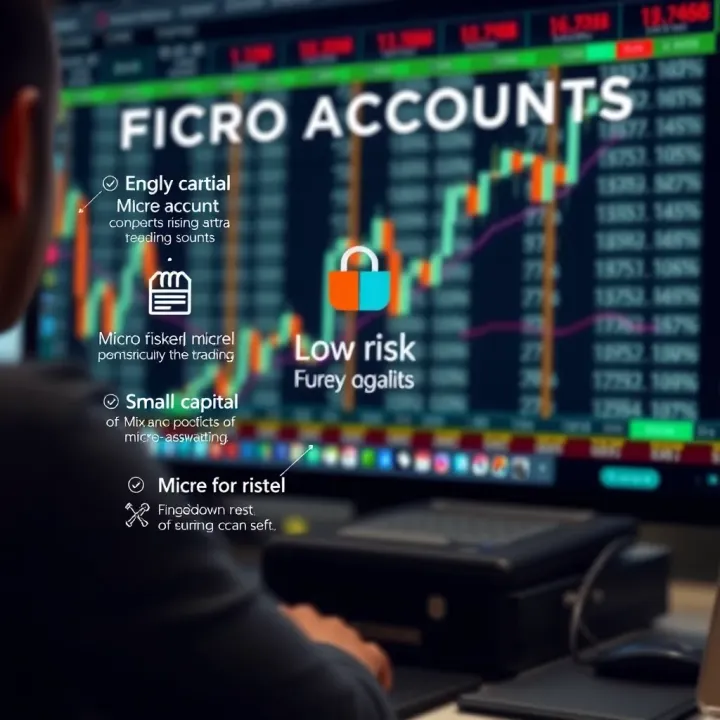
The appeal goes beyond just the lower financial commitment. Micro accounts usually come with more relaxed margin requirements, making it easier to open trades even with smaller deposits. This is particularly beneficial during loadshedding periods when your home internet or power supply might be unstable — lower trade sizes mean you avoid putting too much on the line if you must close positions abruptly.
Micro accounts provide a low-risk path into forex trading by allowing you to manage smaller positions and learn the ropes without exposing yourself to heavy losses.
For South African traders, here are some practical points to keep in mind:
Look for brokers regulated by recognised authorities and familiar with South African market conditions.
Ensure the trading platform supports ZAR funding to minimise conversion costs.
Pay attention to spreads and commission structures, as these can eat into profits when trading smaller amounts.
Use the account to practice strategy development, money management, and emotional control before scaling up.
Starting with a micro account doesn’t mean you’re locked into tiny trades forever. Many brokers let you upgrade to mini or standard accounts once you gain confidence and capital. And because forex markets operate 24/5 globally, you can trade at times that suit your schedule without rushing decisions.
In sum, if forex trading feels daunting or if you're cautious about putting down big money, a micro account holds plenty of advantages. You trade less risk, learn a great deal, and prepare yourself for more significant moves later on — all of which helps build a sustainable trading approach in South Africa’s fast-moving forex scene.
A forex trading micro account is designed to give traders a low-risk entry point into the foreign exchange market. Its importance lies in allowing smaller trade sizes, which means you don't need heaps of capital to start trading or to practice your strategies. For South African traders, who may be cautious about risking large sums due to the volatile rand or local economic fluctuations, micro accounts offer a practical way to get hands-on experience without breaking the bank.
In micro accounts, the basic unit of trading is much smaller than in standard accounts. Typically, a standard lot in forex equals 100,000 units of currency, but a micro lot represents only 1,000 units. That means if you're trading the USD/ZAR pair, instead of dealing with R1.8 million worth of currency (assuming USD/ZAR at around 18), you're only trading about R18,000 per micro lot. This smaller scale is especially useful when you want to test the waters or practice risk management without risking large sums.
Micro accounts usually require a much lower minimum deposit compared to standard accounts, with some brokers offering openings from as little as R100 to R500. This makes them accessible for individuals who don’t have a hefty starting capital or prefer cautious exposure. Lower initial investments also mean you can diversify your trading across different currency pairs or strategies without depleting your funds rapidly.
Leverage lets you control a larger position than your deposit size would normally allow. In South Africa, brokers commonly allow leverage from 1:50 up to 1:200 on micro accounts. While this amplifies profits, it also increases the risk of bigger losses. For starters, it's wise to opt for conservative leverage to avoid margin calls — where the broker demands more money to cover losses — especially in volatile markets like USD/ZAR or GBP/ZAR.
Mini accounts operate in lots of 10,000 units, ten times larger than micro lots. Standard accounts use 100,000 units per lot. That difference determines your actual exposure in the market. Trading a micro lot reduces your potential loss or gain by a factor of 10 or 100 compared to mini or standard lot sizes respectively. This lowered exposure makes micro accounts well suited to novices or traders experimenting with new strategies.
Some trading styles, like scalping, which involves quick small trades, benefit from micro accounts since they allow tight position sizing and frequent trades without risking much capital. Swing traders or long-term position traders might prefer mini or standard accounts for higher profit potential, but those same traders often start with micro accounts to test their strategies safely.
Brokers often apply wider spreads or slightly higher commissions on micro accounts to cover costs of smaller trades. For example, a spread for EUR/USD might be 1.5 pips in a micro account, compared to 1 pip in a standard account. While this makes trading more expensive proportionally, the low starting capital still outweighs the cost for many traders. Savvy traders often reduce costs by choosing brokers with tight spreads or trading during high liquidity hours.
Micro accounts offer a hands-on, affordable platform to learn forex trading with minimum risk — ideal for South Africans starting their trading journey or testing fresh ideas in the market.
By understanding these features and distinctions, you can better decide if a micro account suits your trading goals and how to approach it wisely.
Trading with a micro account offers three clear advantages for both new and seasoned forex traders. It reduces upfront risks and capital needs, sharpens money management skills through lower traded amounts, and exposes traders to live market conditions without committing large sums. This makes micro accounts an efficient stepping stone to full-size trading.
Micro accounts are particularly suited for beginners because they let you enter the forex market without locking away heaps of cash. For example, instead of needing R10,000 or more for a mini account, you might start with just R500 or R1,000. This smaller capital need lowers the barrier to participation and ensures that a few bad trades won’t wipe you out.
Testing strategies becomes more manageable too. Say you want to try a new trading approach based on moving average crossovers. Doing so in a micro account means a losing streak costs you only a small portion of your funds. This practical trial-and-error fosters learning without the fear of large losses, helping you refine your technique in a more forgiving environment.

Using a micro account encourages disciplined position sizing. Traders can open positions based on very small lot sizes (usually 1,000 units or less), letting them adjust exposure precisely. For instance, you might risk only 0.5% of your R1,000 balance per trade — meaning R5 at stake — which is far easier to manage than risking R50 or more in a standard account.
This precise control helps you stay within risk limits, reducing the chance of a blowout. Better risk management practices established early can set you up for long-term trading success, building habits like sticking to stop losses and setting conservative targets.
Micro accounts trade on live market prices, so what you experience is no simulation. Execution speeds and spreads reflect actual conditions, assisting you in understanding slippage, execution delays, and spread fluctuations. This exposure prepares you for the realities of running trades in full-sized accounts.
Besides practicalities, micro trading prompts encounters with real emotions—excitement over winning trades, frustration with losses, and the urge to overtrade. Learning to manage these feelings in a low-stakes setting imparts valuable emotional control. Without it, even the best strategies can crumble when shaken by stress.
Trading a micro account isn’t just about small money; it’s a training ground for your trading discipline, strategy refinement, and psychological resilience. Taking it seriously paves the way to bigger, more confident steps into forex trading.
Trading with micro accounts calls for careful thought about several practical elements that can make or break your experience. While smaller trade sizes lower the stakes, they don’t wipe away the need for sound decisions around broker selection, managing costs, and understanding leverage. These components directly affect your trading success, especially when you’re managing limited funds.
Finding a well-regulated broker is key to safe trading. In South Africa, brokers registered with the Financial Sector Conduct Authority (FSCA) offer a layer of protection. This means they follow rules that help shield your funds and personal information. A broker operating without FSCA oversight may offer tempting bonuses or ultra-low spreads but may not be reliable when withdrawals or disputes come up. Always check the broker’s regulatory status before opening an account.
Your trading platform is where the action unfolds. A broker’s software needs to be stable with fast execution to seize opportunities. Especially in micro trading, where small price changes can affect profits, a platform lagging by a few seconds can cost you. South African traders often favour platforms like MetaTrader 4 or 5, which support custom strategies and provide real-time charts. The key is to pick a broker offering platforms that suit your style and don’t suffer frequent downtime or delay.
Costs eat into your profits more when trading smaller amounts. Brokers might offer tight spreads but compensate with commissions or fees. For a micro account, understanding the total cost per trade is crucial – this includes spreads (the difference between buy and sell price), commissions per lot, and any hidden fees like withdrawal charges. Compare costs among brokers to make sure your gains aren’t wiped out by high expenses.
When you trade micro lots, even a small spread impacts your break-even point. If the spread is wide—say 3 pips—it means the market has to move in your favour by that much just to avoid losses. For micro accounts, where each pip can represent just a few rands, wide spreads significantly reduce profit margins making it tricky to build reasonable gains over time.
You can lower costs by:
Selecting brokers with consistently tight spreads, especially during peak market hours.
Trading currency pairs with high liquidity, such as USD/ZAR or EUR/USD, as they usually have narrower spreads.
Minimising unnecessary trades to avoid repetitive spread costs.
This practical approach means you keep more of your trading profits and avoid getting stuck in a cycle of just breaking even.
Leverage lets you control larger positions with less capital, but it’s a double-edged sword. In micro accounts, many brokers offer leverage of up to 1:100 or more. Using full leverage can quickly drain your small account if the market moves against you. Responsible traders limit leverage to manageable levels, maybe 1:10 or 1:20, to avoid big losses and keep trades sustainable. This helps build a steady, disciplined approach.
Margin calls happen when your account equity falls below required levels to keep positions open. With micro accounts, margin calls can come fast if you over-leverage or face sudden market swings, leaving no room to recover. Knowing your margin requirements and monitoring your positions closely is essential. Some brokers offer stop-out levels to automatically close losing trades before you wipe out your entire account, which is a handy feature to look for.
Trading micro accounts involves more than just placing small trades — it's about making thoughtful choices that protect your capital and set you up for growth.
Focusing on proper broker selection, managing costs, and using leverage wisely puts you on a stronger footing as you navigate the forex market with smaller funds.
Developing trading strategies in a micro account is a vital step for anyone serious about mastering forex trading without risking substantial funds. Micro accounts let traders experiment with real market conditions using very small amounts of capital, which means mistakes become affordable lessons rather than costly errors. This hands-on exposure sharpens decision-making skills and helps refine approaches before stepping up to larger trades.
Trading in micro accounts allows you to test various strategies without risking large sums, which is especially handy for beginners or those trying a new method. For instance, you might try a range of stop-loss techniques or entry points to see which combination works well in real-time. Because trades are scaled down, even if a strategy requires adjustments, the financial impact is minimal.
Adjusting strategies based on real market feedback is equally important. Micro accounts expose you to live market dynamics — price swings, spread changes, and unpredictable events — offering practical lessons on what works and what doesn’t. For example, if your initial strategy struggles during high volatility periods, you can tweak your positions accordingly without fear of heavy losses. This iterative process of trial, feedback, and adjustment sharpens your trading instincts gradually.
Getting comfortable with trading platforms and tools is crucial for successful forex trading. Micro accounts provide a playground to learn the ins and outs of platform interfaces, charting tools, order types, and risk management features without pressure. For example, you can practise using MT4 or MT5 features like setting pending orders or applying technical indicators until your actions feel second nature.
Practising disciplined trading habits underpins long-term success. Small trade sizes don’t eliminate risk but make it easier to stick to your risk management rules like not risking more than 1% of your capital per trade. This discipline builds resilience and controls impulsive behaviour — key pitfalls even for experienced traders. Over time, disciplined micro trading helps develop patience, better planning, and emotional control that carry over when moving to larger accounts.
When it comes to forex trading, the micro account is your sandbox — a safe space to learn, make mistakes, and grow confident without the stress of heavy losses.
By embracing micro accounts for strategy development, South African traders can build strong foundations, reduce costly errors, and prepare themselves for more serious trading with larger stakes down the line.
Trading forex using micro accounts comes with its own set of challenges that many beginners overlook. It’s vital to recognise these hurdles early on to protect your capital and build stronger trading habits. Common issues include the temptation to overtrade due to the low risk of small trade sizes and the psychological pressures of dealing with wins and losses. Understanding these challenges in practical terms helps you stay in control and avoid costly mistakes.
With micro accounts, it's easy to fall into the trap of overtrading because each position involves minimal risk. For example, a trader might keep entering multiple trades just because losing R10 or R20 doesn't feel damaging. However, piling on too many trades can eat into your trading capital via spreads and commissions, eventually becoming counterproductive. Resisting this urge means recognising that more trades don’t automatically mean more profits; patience and selectivity matter a great deal.
Discipline is the backbone of any successful trading approach. Staying patient and waiting for well-defined trade setups helps you avoid impulsive decisions that often lead to losses. When trading micro accounts, practising a rule-based trading plan is essential. For instance, only taking trades that meet specific criteria like a clear trend or support level reinforces good habits that will serve you well as your account grows.
Even though micro accounts carry less financial risk, the emotional impact of winning or losing doesn't vanish. It’s common for traders to feel overly excited after a few successful trades or become discouraged after losses. This emotional rollercoaster can cloud judgment and prompt erratic behaviour. Recognising how emotions influence decisions is key — try keeping a trading journal to track emotional states alongside trade outcomes.
Impulsive decisions usually occur when traders chase losses or try to secure quick gains. For example, after a losing streak, one might increase trade sizes recklessly to regain losses fast, which can lead to bigger drawdowns. Avoiding such behaviour means sticking to your risk management rules and taking breaks when emotions run high. Practising mindfulness or simple breathing techniques can also help keep impulsiveness in check.
Sticking to a disciplined trading plan and recognising the emotional side of forex trading are your best defence against common pitfalls in micro accounts. Slow and steady wins the race.
By mastering these common challenges, you’ll build a solid foundation for long-term trading success, especially suited to the lower stakes of micro accounts. Patience, self-awareness, and discipline are what separate good traders from the rest.
Starting out with a forex micro account offers South African traders an affordable and accessible path into the currency markets. These accounts demand lower investments, making them suitable for beginners or those testing new trading strategies without risking large sums. Understanding how to open and fund an account within the South African context is key, as is grasping the local regulations and tax rules that apply.
Required documentation and verification
Opening a forex micro account typically requires submitting identification documents. For South African residents, this involves a valid ID book or smart ID card, proof of address such as a utility bill not older than three months, and occasionally, bank statements to verify source of funds. Brokers regulated locally or internationally insist on this verification to comply with laws like the Financial Intelligence Centre Act (FICA), which fights money laundering. Having these documents ready speeds up the process.
Funding methods convenient in South Africa
Funding a forex account from South Africa can be straightforward if you use popular payment methods. Many brokers accept electronic funds transfers (EFT), which are common and widely used across South African banks. Instant methods like credit or debit cards, including Visa and MasterCard, are also popular. Newer digital wallets or payment systems like PayPal may or may not be accepted depending on the broker. It’s wise to check if fees apply for deposits or withdrawals, and how long transactions take — EFTs can take a day or two, while card payments often clear immediately.
Understanding local regulations affecting forex trading
Forex trading for South African residents is generally allowed, but brokers must comply with local and international regulations. The South African Reserve Bank (SARB) monitors currency flow and exchange controls, while the Financial Sector Conduct Authority (FSCA) oversees broker licenses and conduct. Traders should verify that brokers are authorised either by the FSCA or reputable international bodies to ensure safety. Stick to brokers with transparent terms and official regulation to avoid scams.
Tax implications on forex profits
Profits from forex trading in South Africa are taxable and must be declared to SARS (South African Revenue Service). Depending on your activities, SARS may treat these earnings as either capital gains or income, influencing how much tax you pay. For many individual traders, profits count as income and should be reported under the Income Tax Act. Keeping accurate records of trades, deposits, and withdrawals helps when submitting returns. Consulting a tax professional familiar with trading income is a smart move to avoid complications.
Remember, starting forex trading with a micro account in South Africa means not only understanding the trading itself but also navigating the formalities of account opening, funding, and compliance with local laws.
By paying attention to these practical steps, South African traders can confidently begin their forex journey with small stakes and proper groundwork.
Explore forex trading software essentials: types, key features, risks, and expert tips to choose the right tool and boost your trading success 💹🔍

Explore forex trading simulators to practice currency trading risk-free! Learn features, tips, and how to pick the best one for South African traders 📊💱

🌍 Explore key players, market structure, proven trading strategies, risk controls, regulations & economic impact in global forex trading insights. 💹

Explore forex trading in Yokohama 🇯🇵 with insights on local markets, regulations, top brokers, risk tips, and analysis methods for smarter trades 📈💡
Based on 13 reviews