
Fundamental Forex Trading Basics and Strategies
📉 Learn how economic indicators shape forex markets and get practical tips on fundamental trading strategies to boost your currency trading skills.
Edited By
James Thornton
Binary forex trading offers a straightforward way to speculate on currency price movements. Unlike traditional forex trading, where profits depend on how much a currency moves, binary options simplify the process by focusing on a yes-or-no outcome: will the price be above or below a certain level at a specified time?
At its core, binary forex trading involves predicting whether a currency pair—such as USD/ZAR or EUR/GBP—will rise or fall within a given timeframe. The payoff is fixed: if you’re correct, you earn a predetermined return; if not, you lose your initial stake. This simplicity appeals to many traders, especially those new to forex markets or those who prefer defined risk.
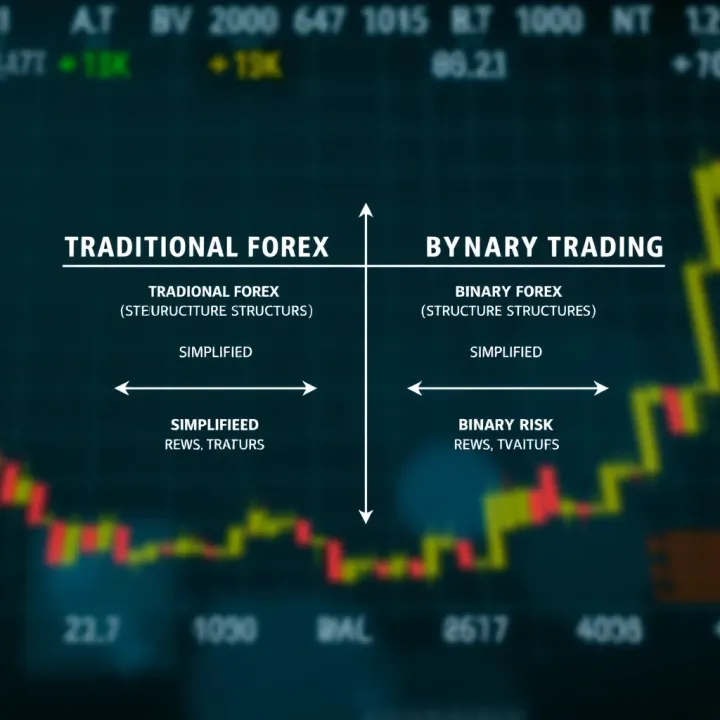
Risk Exposure: Traditional forex trades expose you to unlimited gains or losses depending on market moves; in binary forex, your loss is capped at your initial investment.
Trade Duration: Binary options often have short expiry times, ranging from minutes to hours, while forex trades can last days or weeks.
Profit Structure: Returns are fixed in binary trading, so you know your potential reward upfront. Forex profits depend on price movement size.
One practical example: If you speculate that the Rand will strengthen against the Dollar by 3 pm today, you place a binary option trade. If at expiry the USD/ZAR rate is lower than your strike price, you get a fixed payout—say, 80% of your investment. If not, you lose what you staked.
Clear risk and reward.
Simple to understand and execute.
No need for detailed market analysis to estimate price movement extent—just direction and timing.
However, traders should be wary of risks:
High chance of total loss if the prediction is wrong.
Many binary forex providers are unregulated or operate outside South African law.
Short timeframes encourage frequent trading, which can exacerbate losses.
For South African traders, understanding local regulations from the Financial Sector Conduct Authority (FSCA) is vital. Trading through legal, compliant brokers helps protect your investment. Taking time to learn the instrument, practising with demo accounts, and applying disciplined money management reduce risk considerably.
This introduction sets the stage to explore binary forex trading’s concepts, practical tips, and regulatory essentials tailored for the South African context.
Binary forex trading has gained traction as a simplified way to gain exposure to currency price movements. Instead of owning currencies or managing complex positions, traders place bets on whether a currency pair will move up or down within a certain timeframe. This is especially appealing for those seeking clear-cut, short-term outcomes without getting entangled in the usual forex market intricacies.
For example, if you think the rand will strengthen against the US dollar in the next hour, you choose a 'call' option; if it does, you make a fixed return. If not, the stake is lost. This all-or-nothing structure makes binary forex distinct and accessible, but it also requires understanding the basic mechanics and risks.
Binary options in forex essentially boil down to a yes/no proposition about the future direction of a currency pair. You'll pick an asset like EUR/ZAR and a time frame—say 15 minutes or one hour. You then decide whether the price will be above or below a specific level when the option expires. If your call is correct, you receive a predetermined payout; if not, you lose your stake.
This straightforward method removes the need for calculating pip values, margin requirements, or holding large positions typical in traditional forex. It can suit traders looking to speculate with limited capital and who prefer fixed risks.
A binary forex trade differs from classic trading by offering a capped profit or loss. Say you invest R500 in a trade with an 80% payout. If successful, you'll get your R500 stake back plus R400 profit. If not, your entire R500 is gone.
This fixed-risk model means you know your maximum loss upfront, helping you manage your bankroll effectively. However, the possibility of losing your entire stake on a wrong prediction demands disciplined money management and realistic expectations.
Traditional forex trading involves buying or selling currency pairs with variable profit or loss based on price movement size. While profits can be unlimited with leverage, so can losses. This requires careful margin and risk controls.
Binary forex trades offer fixed outcomes: you either make a set profit or lose your stake. This limits risk but also caps potential gains. It removes the complexity of stop-loss orders and margin calls, but traders might find the all-or-nothing nature stressful.
Traditional forex demands understanding charts, indicators, order types, and leverage. It's a learning curve that can deter novices. Binary forex simplifies decisions to predicting price direction within a timeframe, making it more accessible.
Mobile platforms have made binary forex trading easy to access anywhere, which appeals to casual traders in South Africa. Still, beginners should remember that simplicity doesn’t guarantee success; solid strategies and discipline remain essential.
Understanding the core differences between binary and traditional forex trading helps traders pick the right approach for their risk appetite and trading style.
Overall, knowing what binary forex trading entails equips you to navigate this market with realistic expectations and clearer strategies tailored to the South African context.
Understanding the key features of binary forex trading helps traders weigh their options and manage risk effectively. This segment breaks down the main types of binary forex trades and explains how expiry times influence your trading strategy.
High/low options are the most common binary trades where you predict whether a currency pair’s price will be above (high) or below (low) a specific level at the expiry time. For example, if you believe the EUR/USD pair will finish above 1.1200 in the next 30 minutes, you’d choose a "high" option. This straightforward approach suits beginners, offering clear outcomes and fixed returns, which helps in budgeting risk.
One-touch options demand forecasting whether a currency price will hit a certain target at least once before expiry. Suppose USD/ZAR is trading at 17.50, and your one-touch option predicts it will reach 17.70 before the expiry in an hour. If it does, you earn a payout regardless of the eventual closing price. This type suits traders who anticipate strong moves or volatility but requires sharp timing and market analysis.
Range options require predicting if the currency price will stay within or break out of a certain price band during the contract. For example, you may wager that GBP/USD will remain between 1.3100 and 1.3200 for the next two hours. It’s popular in relatively stable markets or when you expect limited price swings. Range options offer a different way to profit beyond simple price direction.
Expiry times are central to binary forex trading since your prediction depends on a time frame. Short-term expiries (minutes to an hour) offer quick results and attract traders wanting fast trades, but they can be more volatile and harder to predict accurately. Long-term expiries (hours to days) allow for more thorough market analysis and can reduce noise from minor price fluctuations.
Choosing your expiry time depends on your trading strategy and risk appetite. If you’re comfortable analysing real-time charts and reacting swiftly, short-term options might be your go-to. Alternatively, using longer expiries can match fundamental or longer-term technical views, capturing broader trends instead of momentary blips.
Tip: Align your expiry time with how well you understand the currency’s behaviour and your ability to monitor the market — this balance often separates consistent traders from those who burn through their capital too fast.
By mastering these key features — types of trades and expiry nuances — you gain practical levers to refine your trading approach, manage risk deliberately, and tailor binary forex trades to your comfort and skills.
Binary forex trading presents unique benefits and risks that South African traders should carefully weigh. Understanding these factors helps manage expectations and safeguards capital in a market known for its quick shifts and complexity. Given the varying levels of experience among traders and local market conditions, recognising these aspects is particularly useful.
Binary forex trading appeals partly because it offers fixed risk and reward. With every trade, the maximum loss is limited to the initial stake, while the potential profit is clearly defined upfront. This predictability makes it easier for traders to manage their bankroll and avoid surprises, unlike traditional forex where losses can multiply unexpectedly.
For example, if you place a R500 trade on a binary option predicting the ZAR/USD rate will rise, you know the maximum you can lose is R500. If your prediction is correct, you might receive a fixed payout, say R900, depending on the broker’s terms. This setup can give traders a clearer sense of control, especially important in volatile currency pairs.
Binary forex trading usually requires less starting capital compared to traditional forex, making it accessible for traders with smaller budgets. Many platforms allow minimum trades as low as R100 or even less, which means you don’t need to risk a large sum to join the market.
This is practical in the South African context, where some aspiring traders may find the deposit or margin requirements of standard forex accounts too high. Starting small lets you learn the ropes without straining your finances. However, a lower stake does not mean less responsibility; sensible money management remains crucial.
Mobile trading apps have grown popular here, and binary forex trading fits well into this trend. You can place trades, monitor expiry times, and track your results on a smartphone or tablet — anytime, anywhere.
This convenience suits South Africans juggling work, study, or family commitments. For instance, a trader commuting on the Gautrain or in traffic behind a robot can quickly check currency movements and open or close trades without sitting in front of a desktop.
One must remember binary forex trading carries the real risk of losing the entire stake on a trade. There’s no partial refund if the market moves against your prediction, which differs from some traditional forex trades where stop losses can limit damage.
For example, a trader placing a R1,000 bet incorrectly forecasting the GBP/ZAR price direction stands to lose the full R1,000. This absolute loss risk requires strict discipline: only trade amounts you can afford to lose and avoid chasing losses.
Currency markets can shift in the blink of an eye. Events like unexpected SARB interest rate changes, global crises, or commodity price swings can cause rapid moves. Volatility can disrupt binary trades since small, last-moment shifts often decide if a trade expires "in the money" or not.
Successful traders monitor news and economic indicators closely and may avoid short expiry trades during highly volatile periods. Keeping an eye on the rand’s behaviour around Eskom announcements or world events can help you time trades better.
Sadly, the rise in binary trading popularity has attracted unscrupulous operators. South African traders must be cautious to avoid scams or unregulated brokers promising guaranteed profits or unfair terms.
Always check that the broker is registered with the Financial Sector Conduct Authority (FSCA) and read plenty of user reviews. Be wary of brokers who pressure you to deposit more or make unrealistic claims. A reliable broker offers transparent rules, responsive customer support, and educational resources.
Remember: careful broker selection and sound risk management are your first line of defence in this fast-paced market.
Understanding these benefits and risks equips South African traders to approach binary forex trading with realism and better control over their investments.
Navigating the regulatory environment and choosing a suitable broker are critical steps for anyone interested in binary forex trading in South Africa. Due to the financial risks involved and the prevalence of unscrupulous operators, understanding the legal framework and confirming broker legitimacy can save traders significant trouble and financial loss.
The Financial Sector Conduct Authority (FSCA) is the main regulatory body overseeing financial services and markets in South Africa, including forex trading. Its core role is to protect consumers, ensure market integrity, and promote fair competition. For binary forex traders, the FSCA’s oversight means brokers operating legally must meet certain standards, such as transparency and responsible marketing practices.
The FSCA also tackles fraudulent schemes and unlicensed operators, which are unfortunately common in binary options globally. Traders should check whether a broker is registered with the FSCA, as this registration is a strong sign they are recognised and subject to local controls.
Trading through an FSCA-compliant broker offers several practical benefits. Firstly, it reassures you that your funds are managed according to South African laws and industry rules, reducing the likelihood of losing money through malpractice or insolvency. Secondly, the FSCA requires brokers to have proper dispute resolution mechanisms, giving you a formal channel to raise issues.
Non-compliant or offshore brokers may not offer these protections. Traders using unregulated platforms often find it hard or impossible to reclaim funds if things go wrong. In South Africa, this compliance is especially relevant as FSCA actively warns traders about high-risk, unregistered binary options providers.
The first step in vetting a broker is to verify their licence. Ask for the broker’s FSCA registration number and cross-check it on the FSCA’s official register. This confirms legality and shows the broker undergoes regular monitoring. Beware of brokers who claim FSCA oversight but cannot provide proof.
Outside FSCA registration, some brokers hold licences from other respected international regulators, such as the UK’s FCA or the CySEC in Cyprus. These can add credibility but remain secondary to FSCA compliance for South African traders.
A trustworthy broker provides a stable and user-friendly trading platform. This includes clear pricing, responsive interface, and dependable execution of trades. Platforms prone to glitches or unexpected downtime can lead to missed opportunities or losses, quite frustrating for traders.
Look for brokers offering demo accounts and transparent information about their technology. For example, many reputable brokers use established platforms like MetaTrader, which South African traders often prefer. Mobile compatibility is also useful, given the popularity of mobile trading in Mzansi.
Responsible brokers prioritise accessible customer support. You should be able to reach out through multiple channels—phone, email, or live chat—and expect quick, clear responses. Good support is critical when technical or account issues arise.
Alongside official communication, checking online reviews and forums can reveal how a broker handles real customer experiences. While no broker is perfect, consistent complaints about withdrawals or misleading terms are red flags.
Always remember: choosing a regulated and reputable broker reduces your exposure to scams and provides a safer trading experience. This is particularly vital in binary forex trading, where risks are higher and market volatility can hit hard.
By understanding South Africa’s regulatory framework and carefully selecting brokers that meet solid criteria, traders can focus more on strategy and less on worrying about the safety of their investments.
Stepping into binary forex trading might seem straight forward, but it calls for a clear understanding and thoughtful preparation. This section provides practical guidance to help you start off on the right foot, focusing on setting up an account and learning basic strategies that can protect your capital and improve your chances of success.
Opening an account with a broker licensed and regulated by South Africa’s Financial Sector Conduct Authority (FSCA) is non-negotiable. Registration typically requires submitting identification such as your South African ID or passport, proof of address like a municipal bill, and sometimes a tax number for verification. This process safeguards your funds and ensures transparency.
Many brokers offer demo accounts where you can practise trading with virtual money. These platforms simulate real market conditions and enable you to familiarise yourself with the trading interface without risking your rand. A demo account is invaluable for testing strategies, understanding how expiry times work, and building confidence before investing real funds.
Start with small stakes when using real money. Binary trading can lead to full loss of the stake if the market moves opposite to your prediction. For example, placing R50 on a currency pair’s rise lets you cautiously learn market behaviour without heavy losses. Managing stakes effectively helps protect your account from steep declines.
Careful analysis of currency movements forms the backbone of any trading strategy. Keep an eye on economic news from key countries like the U.S. or Eurozone, as well as local indicators such as SARB announcements. For instance, if the SARB hints at interest rate changes, rand pairs might fluctuate substantially. Understanding such events can improve the timing and selection of trades.
Keeping emotions in check is crucial. It’s easy to feel pressure after a losing streak or the temptation to chase quick wins. Discipline involves sticking to your strategy and avoiding impulsive decisions. Tools like setting daily loss limits or taking scheduled breaks can prevent emotional trading, which often erodes capital.
Successful binary forex trading demands both technical knowledge and emotional resilience. Starting with a verified account, practising on a demo, pacing your stakes, and analysing movements cautiously can put you ahead of many others dabbling without a plan.
By giving attention to these foundational steps, South African traders can approach binary forex trading responsibly and boost their chances of consistent results.
📉 Learn how economic indicators shape forex markets and get practical tips on fundamental trading strategies to boost your currency trading skills.
📈 Master Forex trading with this practical guide! Explore key concepts, smart strategies, risk management tips, and expert advice tailored for South African traders.
📘 Master forex trading with practical training designed for South African beginners & intermediates. Learn strategies, risk management, & top resources ✅

Explore forex trading software essentials: types, key features, risks, and expert tips to choose the right tool and boost your trading success 💹🔍
Based on 11 reviews